














News & Insights
Witness Hua Power driving the energy transition and advancing a sustainable energy future from a news perspective.
What Is Grid Black-Start? The “Reboot Code” for the Power System in the Energy Storage Era
-
Source:Hua Power
-
Time: 2025-10-25
-
Author:Hua Power
-
Views:926
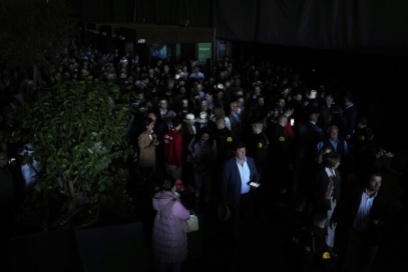
When voltage surges trigger cascading failures that plunge the Iberian Peninsula into darkness, or extreme weather disrupts cross-border grids, how can a paralyzed power system be rapidly awakened? This essential question of energy security points to the “ultimate emergency option” of power systems — grid black-start. In today’s accelerating energy transition, it is increasingly integrated with energy storage and evolving into a new frontline of grid resilience.
1. From “total blackout” to “lights on”: the core logic of black-start
Grid black-start (or “black start”) is the process by which, after a full grid collapse, internal power sources with self-start capability are used to sequentially re-energize isolated sections (island mode), gradually bring other generating units and loads online, and ultimately restore the full network. Think of it as the “first spark” lit in darkness, propagating light across the system.
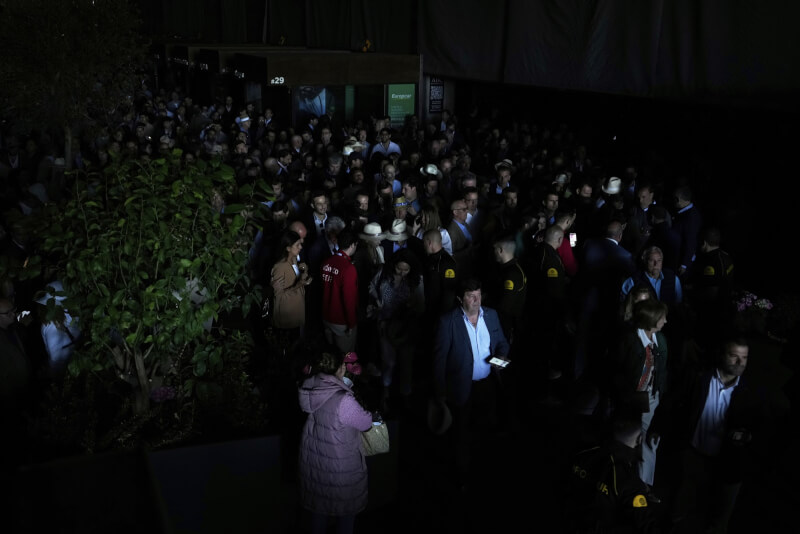
Its value is most evident during extreme events. On April 28, 2025, Spain and Portugal experienced the worst blackout in two decades: a voltage surge wiped out 15 GW of supply within seconds (≈ 60% of national demand), affecting over 55 million people; some regions remained without power for over 16 hours. Investigations pointed to weak interconnection capacity (just ~5%) and a shortage of fast-start, flexible emergency power sources as key factors behind the blackout’s expansion and slow recovery.

Achieving black-start requires following a precise procedure:
-
Segment the grid into smaller “islanded” sub-networks
-
Start self-starting power units to energize those islands
-
Stabilize voltage and frequency in island mode
-
Gradually parallel the islands
-
Reconnect remaining generation and restore full loads
This demands extremely high requirements on power source reliability, response speed, and control precision.
2. From legacy to new: the evolution of black-start power sources
Historically, hydropower plants, thanks to their mechanical simplicity and quick ramping, have long served as the backbone of black-start capability. But hydropower’s geographic constraints leave many regions — especially arid or remote areas — vulnerable.
With rising shares of renewable energy, traditional black-start schemes are under stress. During the Iberian blackout, Spain’s solar share had reached 53% and wind 11%, yet the limited energy storage capacity and lack of flexible, fast-response power sources hampered recovery.
That’s why electrochemical energy storage (batteries) is emerging as a vital complement — and sometimes alternative — to conventional black-start options. Its advantages include:
-
Flexible siting: can be deployed close to loads or in weak grid zones, freeing us from hydrological constraints
-
Ultra-fast dynamic response: millisecond-level adjustment to absorb surges or inject current
-
Grid-forming control: capable of autonomously stabilizing voltage and frequency in island mode

Real-world projects already attest to its potential. The 135 MW / 540 MWh Kapolei battery system in Hawaii supports black-start operations. In 2025, Mongolia’s 80 MW / 200 MWh energy storage facility successfully completed black-start tests. In China, pilot tests in Hubei’s Jingmen and Dalian demonstrate that “storage + backup” hybrid schemes are viable.
3. Technical thresholds — and Hua Power’s practice
Not every energy storage system is capable of black-start. According to the GB/T 43462-2023 “Technical Guideline for Electrochemical Energy Storage Black Start,” three core requirements must be met:
-
Grid-forming operation capability (i.e. the system can autonomously regulate voltage/frequency)
-
Precise matching of power and energy capacity
-
System stability under fault and dynamic conditions

In Iberia’s blackout, the grid lacked fast-forming capability, which made it impossible to suppress voltage fluctuations during restoration.
These stringent conditions test integrated system design and control architectures. Hua Power’s storage solutions align precisely with black-start needs:
-
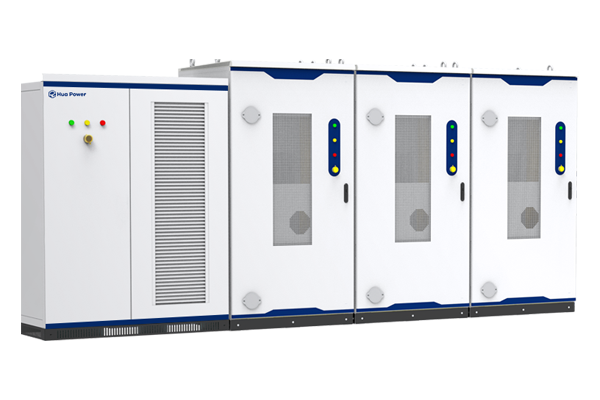
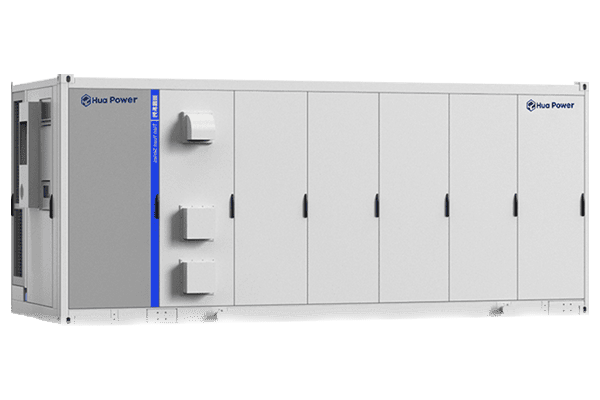
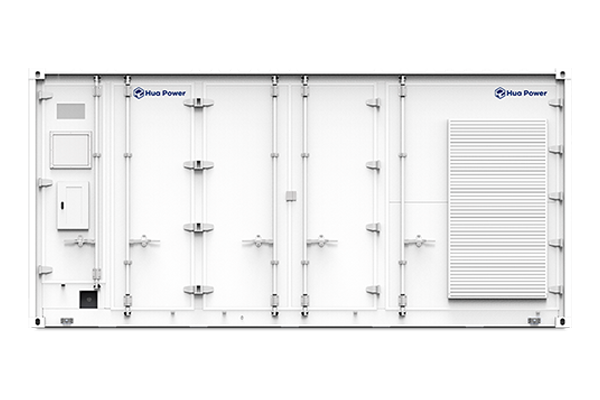
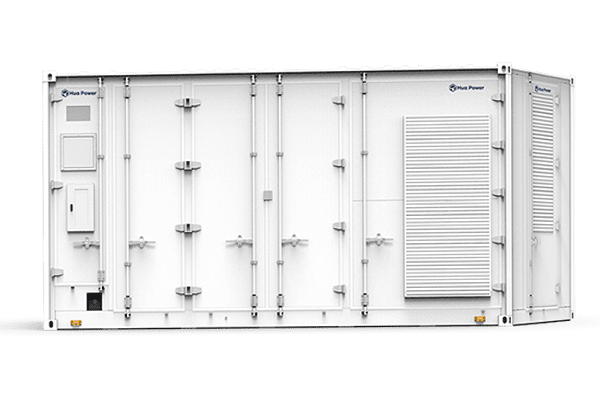
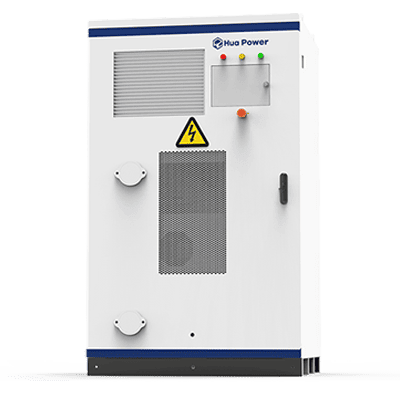
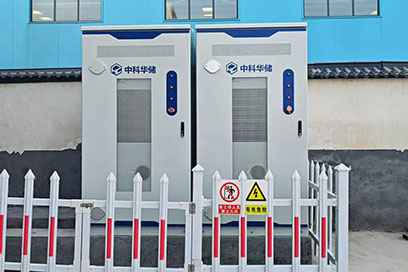
Large-scale liquid-cooled containerized storage: with grid-forming control architecture, millisecond-level response to buffer current surges, regulation precision of ±1%; thermal control keeping battery temperature within ±3°C to ensure consistent high-output performance
-
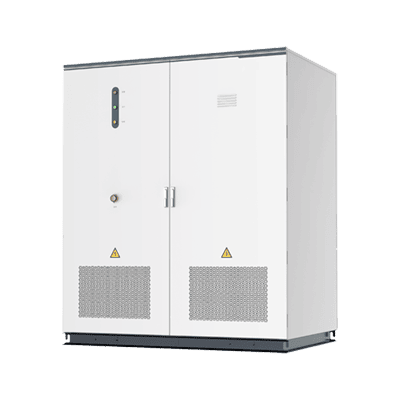
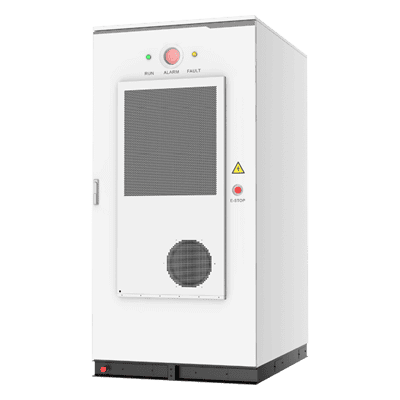
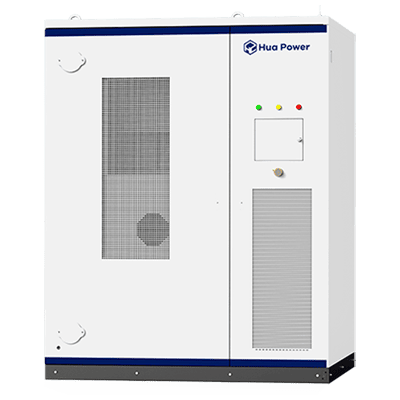
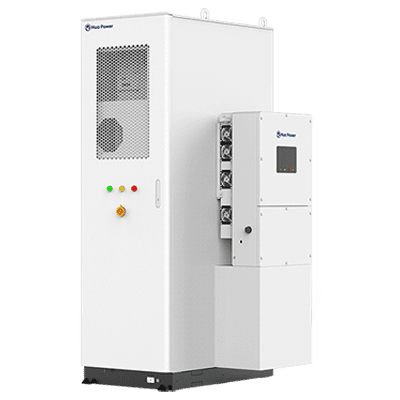
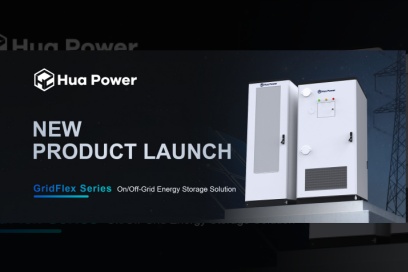
GridFlex series hybrid and islandable storage solutions: integrate battery, PCS, and auxiliary modules; support multi-source coordination (solar, storage, diesel, etc.); achieve seamless grid/island switching within 20 ms, enabling rapid local energization during distribution network faults
-
Proprietary EMS platform: dynamically optimizes control strategies and parameter tuning during black-start scenarios

Leveraging over 200 global project deployments, Hua Power’s systems carry TÜV certification, IEC 62933 conformance, and CQC domestic validation — enabling seamless adaptation to both domestic and overseas energy emergency requirements. They are already deployed in commercial & industrial scenarios as “safety bottom-line” guarantees in the Czech Republic and other markets.
In short: when extreme risk looms, black-start ensures the grid doesn’t stay paralyzed — and energy storage turns that safety net flexible, scalable, and reliable. Hua Power is writing a new chapter in grid resilience through innovation.